
StoneCircle Logo

STONECIRCLE

Premium Specialisation

Design, Execute, and Scale with AI

You train on real workflows, integrations, and business use cases, not just tools. Built to help you deliver measurable efficiency and long-term value to clients.

75

Days Intensive

100%

Live Classes

4.5/5

Rating

$3K+

Monthly Commissions

The Program Roadmap

A structured journey from foundation to real client execution.

Skill Training (Days 1–30)

Build the core technical or functional skill with hands-on practice, guided sessions, and real-world frameworks designed for freelancing.

school

Client Readiness Training (Days 31–51)

Learn how to position your skill, communicate value, price services, and handle real client conversations.

engineering

Paid Client Challenge (Days 52–75)

Execute outreach, pitching, delivery, and secure your first paid freelance opportunity.

work

AI Automation Freelancing Market

Real-world performance benchmarks showing how AI automation transforms workflows, productivity, and income for modern freelancers across all industries.

+52%
Productivity Increase
42–48h
Weekly Time Saved
3.8x
Output Multiplier
$8k–$18k
Monthly Income Range

Workflow Automation Impact

Tasks automated vs manual work distribution

68% Automated
Automated Tasks
68%
Manual Work
32%

AI handles repetitive tasks, freeing time for high-value work.

Weekly Time Savings by Category

Hours saved per week using AI automation

Data Entry & Processing
15 hrs
Communication & Follow-ups
12 hrs
Research & Info Gathering
10 hrs
Scheduling & Calendar
6 hrs
Reporting & Documentation
5 hrs
Total Time Saved = 1.2 full-time equivalents saved per week
48 hrs/wk

Key Performance Improvements

Impact of AI automation on freelance workflow quality

5.2x
Faster Completion
Average task turnaround
-87%
Error Reduction
Fewer mistakes & rework
👥
3.8x
Client Capacity
More projects handled
🎯
96%
Quality Consistency
Reliable output every time

AI Automation Tools Used by Freelancers

Adoption rate among automation freelancers

AI
AI AssistantsChatGPT, Claude, Gemini
91%
🔄
Workflow AutomationMake, Zapier, n8n
84%
📄
Document AutomationNotion AI, Gamma, Lex
76%
🎨
Creative AutomationMidjourney, Canva AI
69%

Market at a Glance

$18.7B
AI Automation Market (2025)
2.4M
Automation Freelancers
+385%
Job Growth (2022-2025)
89%
Client Satisfaction Rate

Freelancing Community for AI Automation

As part of the AI Automation major specialisation, members access a structured freelancing community focused on building and executing real systems, with channels for updates, automation discussions, workflow breakdowns, troubleshooting, collaboration, and freelancing essentials—helping learners solve real business problems and prepare confidently for freelance automation projects.
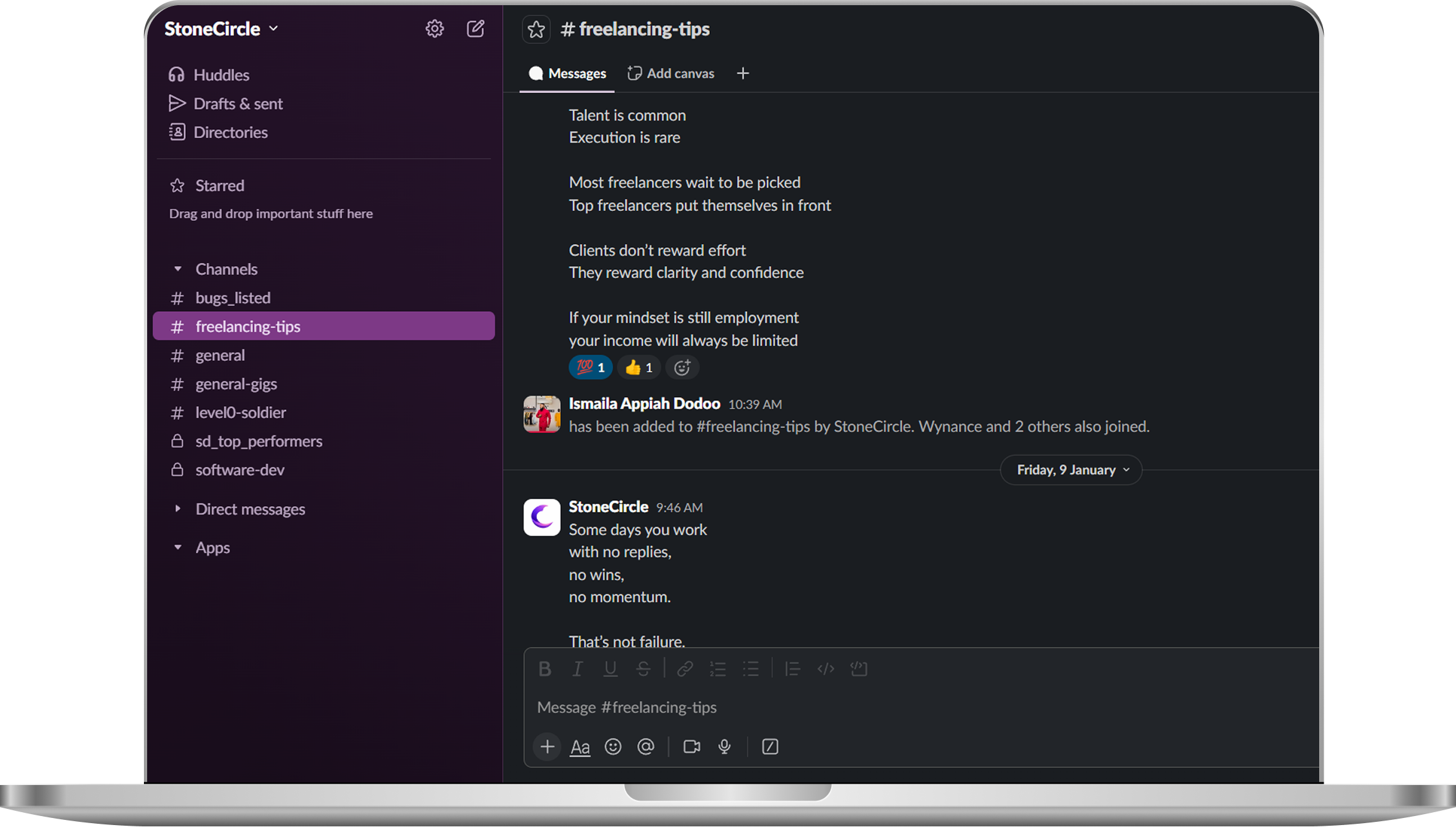
Freelancing Community

FREQUENTLY ASKED QUESTIONS

Yes. Businesses of all sizes need people who can build and maintain automation systems. Freelance automators are hired to solve real efficiency problems—not just set up tools.
Workflow automation, CRM integrations, data processing pipelines, email sequences, lead management systems, reporting automation, and end-to-end business process optimisation using tools like Make, Zapier, and n8n.
With consistent practice, most students are ready to deliver real automation projects for clients within 2–3 months and command premium rates shortly after.
Absolutely. This is one of the fastest-growing freelance categories. Small businesses, agencies, and startups all need automation but cannot afford full-time hires—making freelancers their first choice.
No. Most modern automation tools are no-code or low-code. You need logical thinking, problem-solving ability, and a willingness to learn systems—not a programming background.
Far from it. Demand is growing faster than supply. Most people know the tools exist—very few can actually design systems that solve real business problems end to end.
Yes. Automation systems require ongoing maintenance, improvements, and new integrations. This naturally leads to long-term retainer relationships rather than one-off projects.
You learn to think in systems first—how to identify bottlenecks, map workflows, and design efficient solutions. Tools are the last step, not the starting point.
Critical. Clients rarely know exactly what they need automated. The ability to ask the right questions, translate business pain into technical solutions, and explain results in plain language is what makes or breaks a project.
Showing measurable outcomes. Instead of saying "I built a workflow," saying "I saved the client 15 hours a week and reduced errors by 80%" is what gets you rehired and referred.

Still have something on your mind?